By Peter Thøgersen, Health Policy Consultant, Pharmadanmark
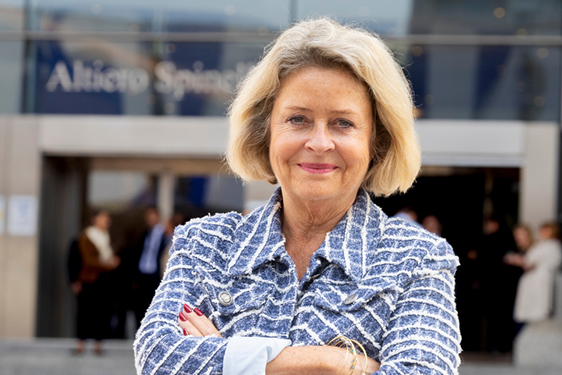
Health is a core priority for Stine Bosse – and this is clear from her work in the European Parliament. She spends a great deal of her time in the Parliament’s health committee, where she serves as vice-chair. And if you ask her, she is convinced that we can do much more for many patients across Europe.
She believes that European patients, fundamentally, must have more equal access to care and opportunities. She fights this fight in part because she has experienced firsthand that treatment options and support were available in other European countries, but not in Denmark, when her adult daughter became seriously ill.
Stine’s daughter developed a viral illness that caused brain damage. The politician was able to pay for her daughter’s treatment herself, but not all patients or families have that possibility – and that is why, she argues, we must ensure better conditions for everyone.
Every effort helps
One of the areas where Stine believes the EU should focus its efforts is rare diseases. And we must remember, she notes, that rare diseases are only “rare” when viewed within each individual country, she points out.
Across the EU, 36 million people live with a rare disease – a scale that makes rare diseases an area where the EU can, and should, do more, says Stine Bosse.
“If we manage to collect and use data, it becomes possible to identify trends and areas for action. Denmark may have the will to do more for rare diseases, but we do not have the ability — we simply lack sufficient data in a small country like ours,” Stine says.
She sees strong commitment among hospitals, doctors, regions and organisations to improve conditions for patients with rare diseases.
“Personally, I use every opportunity to draw attention to patients with rare diseases — for example by organising hearings, participating in events, and generally speaking and writing about the topic. Also in the budget committee, because I believe there are many ways to bring attention to the issue — every effort counts and helps create better conditions. Right now, I am working to encourage the Health Commissioner to develop an action plan for rare diseases, but since he is a busy man, it may take some time.”
Across the EU, 36 million people live with a rare disease – a scale that makes rare diseases an area where the EU can, and should, do more
Stine is particularly concerned with the disease ME, where treatment options in Denmark, in her view, are poorer than in other European countries and where more should be done. The same applies to childhood cancers, many of which are considered rare diseases. Here too, she argues, we should work more closely across borders.
ME – Myalgic Encephalomyelitis: A neurological and physical disease distinct from chronic fatigue. Often triggered by infection or virus, and therefore sometimes referred to as post-viral fatigue syndrome.
Source: www.me-foreningen.dk
We need to calculate correctly
One of the challenges often highlighted is that developing a medicine for a rare disease is not considered profitable. The small patient group simply makes it difficult to recoup the investment. However, Stine questions whether it is really that simple.
“For a start, we need to calculate things correctly. A new medicine for a rare disease may cost, for example, 10 million kroner, but it can offset the costs of doing nothing when you include lost income, additional expenses in the healthcare system, and the impact on the rest of the family. This applies across Europe. We need to find ways to ensure that all children in Europe who are born with a rare disease have access to help – for example through the creation of dedicated funds,” says Stine, and continues:
“Personalised medicine – receiving treatment that is tailored to us, and possibly also gene therapy – is the next generation of medicine. This applies both to rare diseases and to diseases affecting larger patient groups. This is why there is interest in the field from both large pharmaceutical companies and small biotech firms.”
Stine believes that Denmark can and should do more.
“In Denmark, we have a very skilled Medicines Council, almost European champions in ensuring that we can afford our medicines. I believe it is obvious that we should increase cross-border cooperation, and Denmark has the experience and competencies to take the lead,” she says, and continues:
“The new Health Technology Assessment Act is the first step towards ensuring more equal conditions for European patients, but I clearly believe that we should also cooperate more across countries when it comes to adoption. We should have this as a shared European vision, helping to ensure more equal conditions for European patients in the long run.”